Toxic Green Hammer
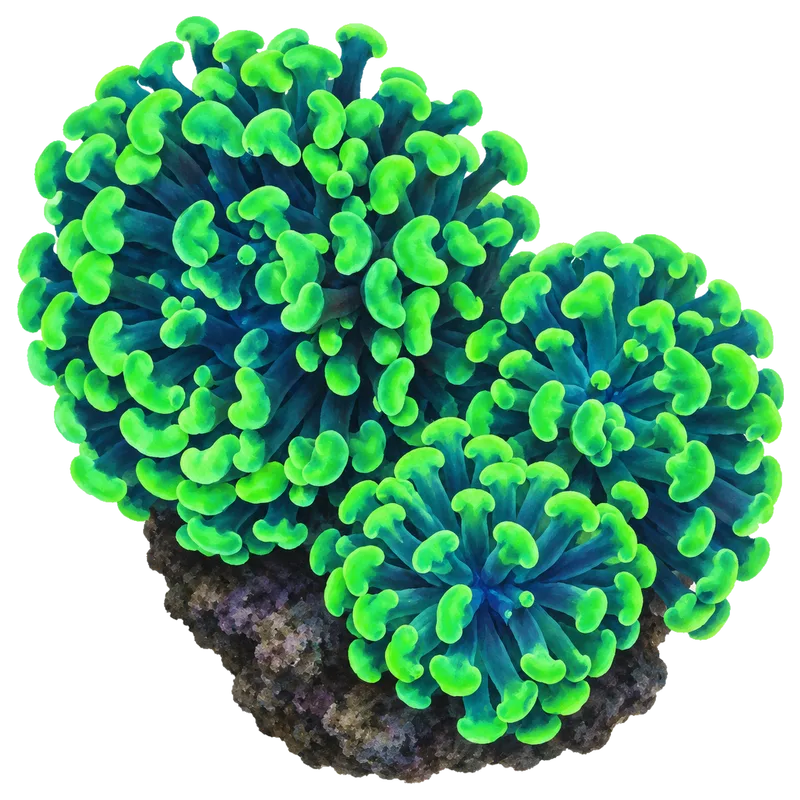
Fimbriaphyllia, an euphyllia. Beginner to keep, typical PAR 75–150, low to moderate flow.
Collector tier: common, where the trade ranks it from common through grail. In stock at 1 surveyed shop on 2026-10-19.
A hammer in neon green, named for the flattened anchor or T shape at the tip of every tentacle, which is what tells a hammer from a torch's flowing points or a frogspawn's forked ones.
Before you buy one
The colour name is the least useful thing in the listing. What decides the coral is the skeleton under it, and the two forms are sold under the same name: a branching hammer carries each head on its own branch, so a head that goes bad can be cut away and the colony lives on, while a wall hammer shares one continuous skeleton and a problem travels along it. Ask which one it is, or look at the base of the frag for separate stalks against a solid ridge. Then leave it room. Hammers throw sweeper tentacles several inches beyond the polyps and will sting whatever they reach, though they generally tolerate other Euphyllia.
Keeping Euphyllia
Space to sweep, because the tentacles reach further than they look. Toxic Green Hammer is beginner to keep at a typical PAR of 75–150 in low to moderate flow. A typical starting range for this type of coral, not measured on this one.
What Toxic Green Hammer goes for
No verified sales yet. A range publishes once 3 dated, checkable records from 3 different sources exist, priced per head and reported as a median, with what shops ask kept separate from what buyers paid. One head is one polyp of a branching LPS. A five-head piece is divided by five before it is compared to anything. Nothing on this page is for sale. The survey found it at 1 of the 106 shops read on 2026-10-19. A range publishes from 3 shops up, so 2 more would have to list it before a figure appears here. One shop's asking price is that shop's opinion rather than a market.
Easily confused with
- Green Frogspawn: Tentacles that fork into bunches of rounded tips. A hammer ends each one in a flat anchor, whatever its colour.
- Hologram Hammer: Green too, but with tips that grade from yellow to purple and shift under the light.